Blog

The Wax In The Ear

"Hey doc," the patients says, "I think I got wax in my ear." I reply, "Well, that makes it hard to hear me, then, huh?" "WHAT?" - the patient yells. Oh yeah, I say to myself. "I've been having this ever since I was a kid. Every few months, I need my ears cleaned out." So, I look in there, and it's the most amount of wax I've seen in a long time.

"Sir, do you use q-tips to clean our your ears?" I ask the patient. "Well, yeah, I think I've been doing a good job at keeping things clean, don't you think?" "Well, I wouldn't recommend that because it looks like you've been pushing the wax further in there." "WHAT?"

So, we're able to get some of the wax out of there only to find a lot of redness and irritation in the ear canal. "Doc, I still can't hear. Are you sure that you got all the wax out of there?" "Well, sir, there is no more wax in there now. It looks like there is an infection underneath, and that's what causing the problem now." "WHAT?"

Without trying to scream too loud, I said, "Try out this medicine. It's an antibiotic. I think that will clear things up for you. See me in a week." The patient noded. He returned in a week. When he came back, I walked in the room and said, "Hi Sir!" "Doc, why are you talking so loud?" I smiled. This is why I love taking care of patients....

Doctors, The Internet, And Social Media


As you know, or can probably figure out, I have an interest (or even a passion for) medicine and technology. So, I very much have an interest to see how technology can help me in my job. I have particular interest in seeing how social media (blogs, podcasts, facebook, twitter, etc) can help me communicate the message better.

This past week, Dr. Kevin Pho, better known as KevinMD, had an op-ed piece in USA Today online entitled "Doctors Ignore Internet At Their Own Peril." It's no secret that Kevin has used social media and the internet to help get the message out on the unique physician view on medical and health policy issues. In his own Linked In profile, Kevin describes himself as "Social media's leading physician voice," and I very much agree with that. In the USA Today piece he says this:

Doctors who are not active online risk being marginalized. Facebook and Twitter users, half of whom are under of age of 34, rely on the web for most of their information. As this demographic ages, it’s conceivable that they will consult social media first to answer their health questions.
Below, you'll see two TV interviews I did on December 18, 2009, on local TV news, talking about Doctors and the Internet (link to interview1 and interview 2).

Almost every day, I have patients ask me about information that they read online or heard from a friend which then directed the patient to search online for more information. I agree with Kevin that docs that continue to marginalize online information or marginalize social media - will themselves be marginalized. (If you would like to see more of my interviews from local TV news on a variety of topics, check out MikeSevilla.TV)

Facebook/Twitter Break? FAIL!


Two weeks ago, I set a goal for myself. I told myself that I would "unplug" from both Twitter and Facebook for two weeks. Initially, that meant not even logging into each of the sites and checking what was going on. Well, I'm proud to say that lasted a mere four days. FAIL!

After I logged in (four days later), I then told myself that on Facebook, I would not leave any comments or do any of that "thumbs up" thing that is so easy to do. Well, that lasted another two days. FAIL! I mean, hey, it is so easy to hit the "like" button when you see something funny or just agree with something you see. And, I couldn't help, but comment on a thing or two on FB.

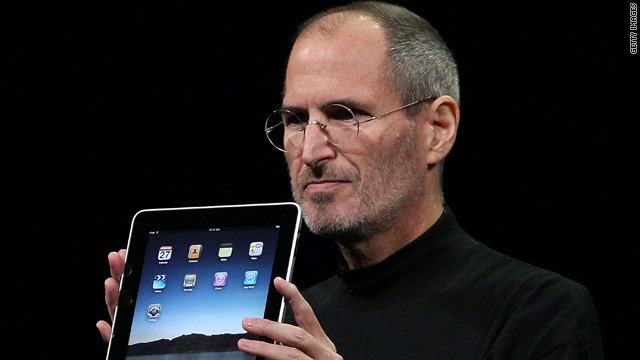
Finally, I told myself that I would not leave a status update or tweet for the remainder of the two week period. Well, during and after the iPad announcement, I just couldn't hold back any more. I wrote a blog post, and I couldn't help but just post up a link on twitter telling people about it. Oh well.

Even though, I say "fail," I don't think that it was (really). I also told myself that I wanted to start blogging (in a long format as opposed to microblogging) again. And I think that I have found the "blogging bug" again - which is a good thing. I have a handful of posts here in "draft" mode and I hope to get back to them to finish.

In addition, my brief "unplugging" experiment told me that I used the computer as an easy excuse for not getting out there and hanging out with real people - in person - here - where I live. I was always thinking of what the next tweet or facebook update would be.

As I jump back into the sea of facebook and twitter after a semi-sucessful mission, one of the things I've definitely decided upon is that I will not be updating as much as I have in the past (really). I apologize if anyone thought I had abandoned these platforms. I was just taking a little break. Now, I'm back. But, I won't be tweeting or updating as much as before. And, that's a good thing, I think.....

iPad For Medicine Is About The Software

In kind of browsing around today, it seems that almost every industry - including education, aviation, business, and medicine - is excited about the latest Apple piece of hardware called the iPad. It's so entertaining reading the apple haters and those in the tech industry complain about the iPad - sheesh!

Anyway, focusing back on the medicine and health care industry, there have been a number of posts that I have read talking about the potential of the Apple iPad device. On KevinMD, Steve Woodruff has a good piece touting the awesome hardware potential of the device and the ideal end point of its use in the medical setting.

A heavily referenced article is from Venture Beat called "Apple tablet reps spotted at LA hospital" which talks about how Apple reps were there "three or four times" in the weeks leading up to the iPad launch. Rumors included that hospital execs and even some docs got to see previews of this piece of hardware.

In an article from TinyComb, they make reference to Motion Computing and their mobile model called the "C5." The C5 is 3-pounds (iPad is 1.5 pounds) and has a price tag of $2199 (iPad base price is $499). We use the C5 device in our hospital. So, I'm familiar with it's pluses and minuses for uses in the clinical setting.

In my view, all of this early analysis misses the point. As a hardware device, I would love to use this in my job right now in the hospital and in the office. I would love to let go of my netbook at the office and use the iPad. I would love to make my hospital rounds with the touch screen and get everything done using this cool form factor.

But, it's not about the hardware people. It's all about the software. Will the corporate EMR hospital and office vendors write updates and patches for iPad? I really doubt that (at this point). I mean they are busy as it is with their own interoperability issues as well as big picture issues like keeping up with CCHIT certification and the mysterious term called "Meaningful Use" which helps hospitals and doctors obtain federal stimulus monies for "meaningful use" of EMRs.

I can just see EMR vendors saying now, "Oh yeah, we can write software to use iPad on the hospital system. It will be an additional (several) hundred thousand dollar price tag for that feature. And, we agree. It'll be cool to see iPads using our system..."

Don't get me wrong, I'm as excited about iPad as the people in the articles above. But, don't expect iPad's impact for medicine to be anytime soon, or to come at a cheap price for hospitals or doctor's offices.....

Update: Greeting to those of you who clicked over from The Blog that Ate Manhattan, Health Highlights, Grand Rounds v6.19, MobiHealthNews, or Wall Street Journal link. I invite you to check out other posts over here. Thanks for stopping by!

Apple Tablet?


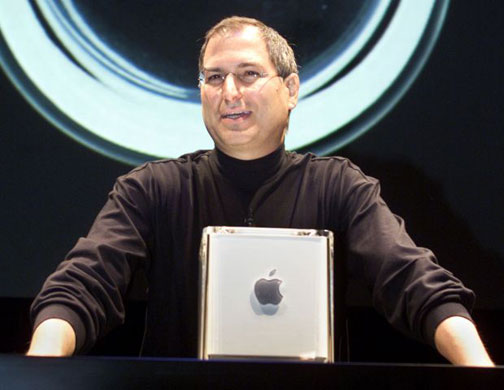
I don't know about you, but I'm more interested in what Steve is going to say tomorrow verses the State of the Union address from Washington. What many people fear (me included) is the possibility that instead of the awesomeness of an iPhone type announcement - what we'll get instead is along the lines of the "mac cube" which flopped a year after it was triumphantly brought out by Steve. We'll see what happens tomorrow....

2009 Medgadget Weblog Award Finalists


Yes kids, it's that time of year again when we vote for our favorite medical weblogs for the previous year. This is of course from our friends at Medgadget. And, you can take a look at all the finalists here. In 2008, I had the honor of having Dr. Nick Genes on Doctor Anonymous Show number 19 to talk all about the Medgadget Medblog Awards. You can listen on the player below. Or, you can download the show here and listen anytime.


Later that month in Jan 2008, Nick returned to the show with the other Medgadget guys to make a final push for voting that year. I believe even Mr. Paul Levy himself called into the show trying to get himself some votes. Listen in the player below or download Dr. A Show 21 right here.


Now, the category that is near and dear to my heart is the Best New Medical Weblog category. Back in the day (hehe) when I was a better blogger than I am now, I begged to be nominated for the best new blog award, and I begged to be voted for - way back in 2007. Who won that category that year? Interestingly enough it was the notorious Dr. Flea.

Anyway, I normally don't do endorsements. I mean, not that anything I say would influence anyone to vote one way or the other. I did want to point out one blog in the New Medblog category called StorytellERdoc.

I have to tell you, if you haven't checked out this blog - you have to. It's a great read. And, for what it's worth, I encourage you to vote for this blog in this category. Best of luck to all the nominated blogs across all the categories this year. And, please show some love and cast your vote to whomever you think is the best in each of the categories...

Quit Smoking & Survive Lung Cancer


Yes, you read that title right. Intuitively, it makes sense. Quit smoking and you can decrease your chance of lung cancer. But, now, there is data out there that patients with early lung cancer - who quit smoking - not only increase their rate of survival - they can double their chances of survival. The article talking about they study is from the Associated Press entitled, "Smokers With Cancer Could Quit And Double Survival."

People with lung cancer who continued smoking had a 29 to 33 percent chance of surviving five years. But those who kicked the habit had a 63 to 70 percent chance of being alive after five years. The research was published Friday in the BMJ, formerly known as the British Medical Journal. Lung cancer is the top cancer worldwide, and the prognosis is usually poor. Only about 7 percent of patients make it to five years, though about 20 percent of patients are diagnosed early enough to be treated.

"The message is you should never give up on giving up (smoking)," said Amanda Parsons, of the U.K. Centre for Tobacco Control Studies at the University of Birmingham, who led the study. "Even at the stage where you have been diagnosed with early stage lung cancer ... if you give up smoking, your body can still partially recover and your risk is reduced," she said.

I once thought (and a lot of patients thought) that when you are diagnosed with lung cancer - it doesn't matter if you quit smoking or not. I fully admit that I have never smoked, ever. I don't personally know how difficult it is to quit. But, I have a lot of patients, who I talk with every day, and, they tell me the struggles that they go through when they try to quit again, and again, and again. At least I can tell them that even if you are diagnosed with early lung cancer, there is data out there saying that it is still not too late to quit smoking....

Warning: Sitting Can Kill You


You think I'm kidding about this, dont you? Well I'm not (hehe). There was a study just published this week which says exactly this. I got the story from the Associated Press in their article entitied, "Experts: Sitting Too Much Could Be Deadly."

Research is preliminary, but several studies suggest people who spend most of their days sitting are more likely to be fat, have a heart attack or even die. In an editorial published this week in the British Journal of Sports Medicine, Elin Ekblom-Bak of the Swedish School of Sport and Health Sciences suggested that authorities rethink how they define physical activity to highlight the dangers of sitting.
"After four hours of sitting, the body starts to send harmful signals," Ekblom-Bak said. She explained that genes regulating the amount of glucose and fat in the body start to shut down. Even for people who exercise, spending long stretches of time sitting at a desk is still harmful.
So, right after reading this blog post (and telling your friends about it - hehe), get up people and move around. Exercise those muscles! Maybe that great REM song (see below) was right - "Stand in the place where you live...."

>

Tragedy


The death of a young person is always a tragedy. Recently in this little town, there was the death of a young person in her/his 20s of a chronic medical condition. It really doesn't matter what the cause is. But, for the sake of this story that was the cause.

One of the great things about primary care is at the same time one of the most painful things about primary care - namely the relationships that docs like me experience. I know I haven't done a good job of "disguising" things or "de-identifying" things from a personal standpoint. You could probably infer from my writing that this person was connected in some way with the office.

Sometimes there are incidents in life which really make you think of what is important in life. It's not really what's going in in other parts of the country, or other parts of the world. What matters is what is happening right here - things that will definitely not make the evening news, yet will impact me in ways that I don't even know about yet.

Life in a small town as a primary care doc gives me experiences - both good and bad - I would not get anywhere else in the world. Where am I going with this rambling post that doesn't make sense? Who knows? Maybe for the first time in a long time I'm really thinking of my mortality? Maybe I'm angry that, yes, sometimes bad things happen to the nicest people. Maybe it just comes down to asking myself - What is really important to me in my life right now? Hmmmmm.....

California to Regulate Doctor Wait Times


Ok, here's an idea, have government mandate how long it takes for you to see a doctor. Don't believe it? Well, California, in their infinite wisdom, is doing just that. I read this story and it just made my skin crawl. It is from The Los Angeles Times and it is entitled, "California Limits HMO Wait Times."

The regulations by the California Department of Managed Health Care, in the works for much of the last decade, will require that patients be treated by HMO doctors within 10 business days of requesting an appointment, and by specialists within 15. Patients seeking urgent care that does not require prior authorization must be seen within 48 hours.

Telephone calls to doctors' offices will have to be returned within 30 minutes, and physicians or other health professionals will have to be available 24 hours a day. California says it is the first state to set time standards for HMOs, which serve nearly 21 million of its residents.

Now, the only people who think this is a good idea are politicians. I can just hear the meetings in the back rooms at the state house - "Well really stick it to those doctors with this one." Here's the simple question - Why does it take so long to see the doctor? The answer is simple - Government and Red Tape. The government created most of this mess - really.

Now, I don't practice in California, but I know where I live, there is form after form after form to be completed associated with patient care. Much of it is trying to keep with government regulations from the state capitol and from Washington. Plus, if anyone utters the words "Pre-Authorization" - they know how much time this takes from an office staff point of view. This useless time on the phone or on a computer could be better spent - Uh, taking care of patients.

So, here is a little tip to my friends at state legislative houses across the country, and in Washington. The best way to improve wait times and overall patient care, is not to increase government regulation, but to DE-REGULATE government control over health care. Not to mention, with this additional layer of government oversight, who is going to pay for this additional oversight with a bankrupt California budget? Did anyone ask that question? Probably not....